
Key Reasons Why Piles Occur During Pregnancy
 | By Dr. Anjana Dabhi Pregnancy is a time of joy and anticipation, but it also brings significant changes to a woman’s body. One common issue that many expectant mothers face is piles, also known as hemorrhoids. While this condition can cause discomfort, understanding its causes can help women reduce their risk. Here, Dr. Anjana Dabhi explains the key reasons why piles occur during pregnancy and how expecting mothers can manage contributing factors. |
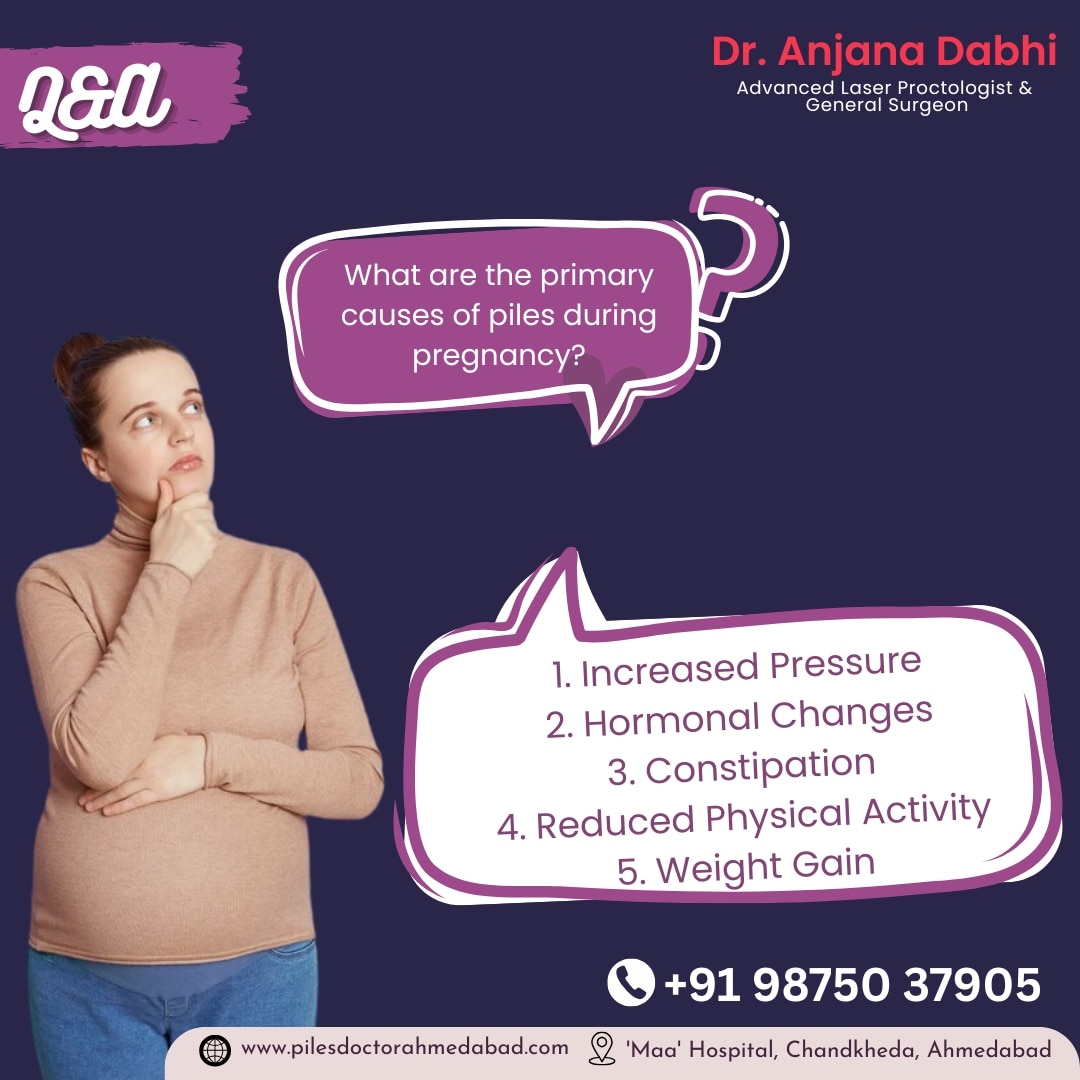
1. Increased Pressure on the Rectal Veins
As the baby grows, the expanding uterus puts pressure on the pelvic region, including the veins around the rectum. This increased pressure can slow blood flow and cause the veins to swell, contributing to piles. This is common during the second and third trimesters.
2. Hormonal Shifts During Pregnancy
Pregnancy causes changes in hormone levels, particularly progesterone. These changes relax blood vessel walls and can slow digestion, making veins more prone to swelling and increasing the risk of constipation.
3. Constipation and Straining
Many pregnant women experience constipation due to hormonal changes and other pregnancy-related factors. Straining during bowel movements puts additional pressure on the rectal veins, which can contribute to the development or worsening of piles.
4. Lack of Physical Activity
Reduced physical activity, particularly during the later stages of pregnancy or when movement is restricted for medical reasons, can affect bowel function. Reduced movement may contribute to constipation and increase the risk of piles.
5. Natural Weight Gain
Weight gain is a normal part of pregnancy. However, the additional pressure on the pelvic region can contribute to swelling of the veins around the rectum and may worsen existing hemorrhoids.
Expert Advice from Dr. Anjana Dabhi
Piles during pregnancy are common and can often be managed with appropriate care. Dr. Anjana Dabhi recommends eating a fiber-rich diet, drinking adequate water, staying physically active with pregnancy-safe exercises, and avoiding prolonged sitting or standing.
If symptoms persist or become severe, consult a qualified healthcare provider for an appropriate assessment and guidance on treatment options during pregnancy.
Contact Us for More Information.
Dr. Anjana Dabhi
Proctologist & Surgeon
M. S. (Surgery) (Ayu.)
Reg. No.: GB I-21643
Disclaimer: This reel, content, and information are for educational purposes only. They do not constitute medical advice or solicit patients. Consult a qualified doctor for diagnosis and treatment.